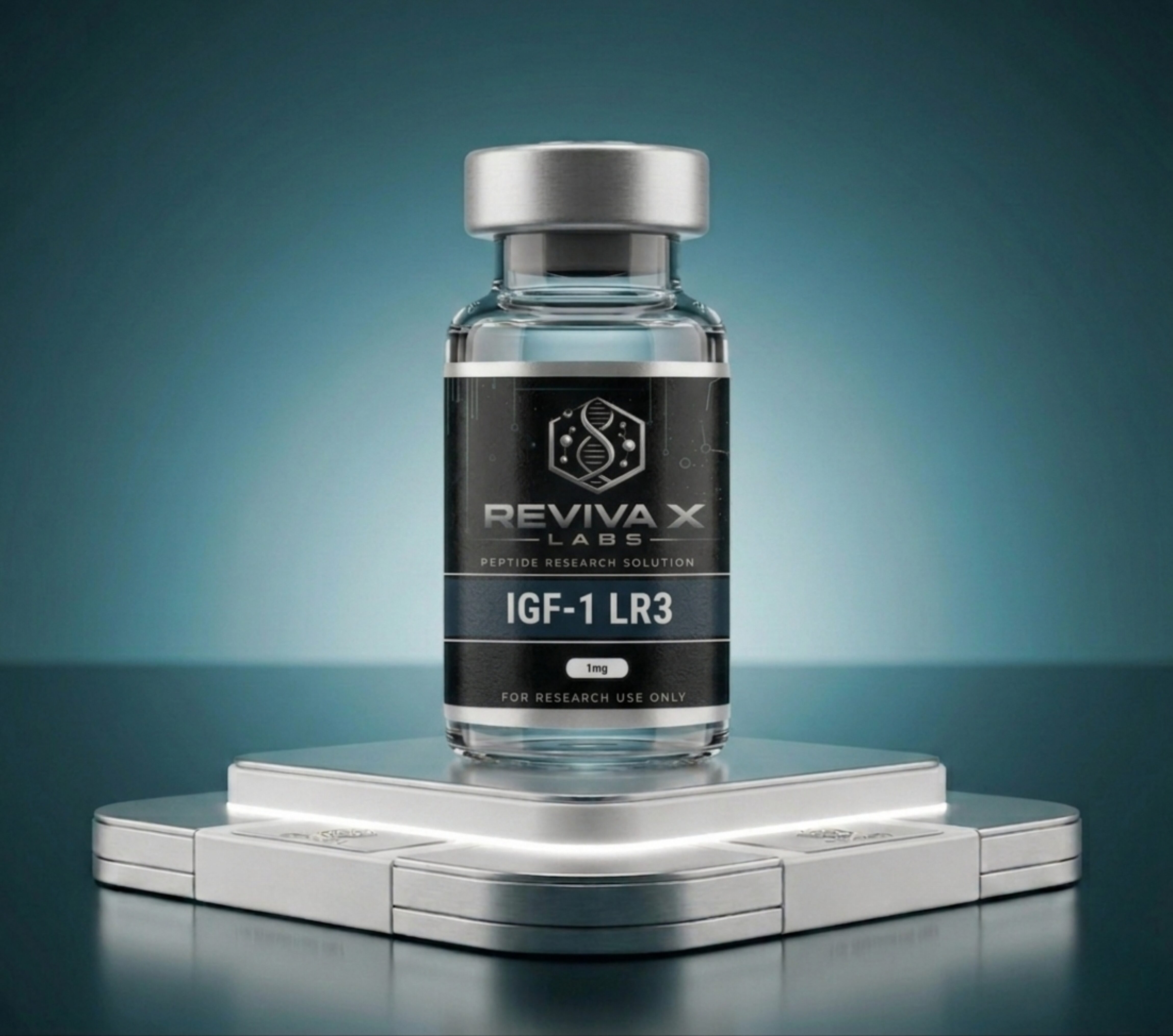
IGF-1 LR3 is a modified 83-amino acid analog of insulin-like growth factor 1, featuring a 13-amino acid N-terminal extension and an arginine substitution at position 3. Preclinical research examines its interaction with IGF-1 receptor signaling and reduced affinity for IGF-binding proteins.
Research Focus: IGF-1 receptor signaling · Growth factor pathways · IGFBP interaction research
For research use only. Not for human consumption.
Quantity
1mg
Purity
99.793%
Format
Lyophilised Powder
Testing
HPLC (Janoshik)
£89.99Original price was: £89.99.£44.99Current price is: £44.99.
10 in stock
Batch Verified
Third-Party Tested
COA Available Per Batch
Product Description
IGF-1 LR3 (Long R3 Insulin-Like Growth Factor 1) is an 83-amino acid recombinant analog of human IGF-1. The modification includes a 13-amino acid N-terminal extension peptide and the substitution of arginine for glutamic acid at position 3 of the mature IGF-1 sequence. These structural changes result in markedly reduced binding affinity to IGF-binding proteins (IGFBPs), increasing the bioavailability and half-life of the peptide in experimental systems.
In preclinical laboratory research, IGF-1 LR3 is utilized to study IGF-1 receptor (IGF-1R) mediated signaling, including downstream Akt/PI3K and MAPK/ERK pathway activation. Researchers employ this analog in cell culture and animal model systems to investigate proliferative, anti-apoptotic, and metabolic signaling responses independent of IGFBP sequestration.
Published experimental literature describes its use in studying myoblast differentiation, satellite cell proliferation, and glucose uptake dynamics in skeletal muscle and adipose biology models.
Molecular Weight: ~9,111 Da CAS: 946870-92-4
This product is intended for in-vitro and in-vivo laboratory research exclusively. Not for human consumption.
Mechanism of Action
A modified analogue of IGF-1 with an arginine substitution at position 3 and a 13-amino acid N-terminal extension. Reduced binding to IGF-binding proteins results in greatly enhanced bioavailability and potency compared to native IGF-1.
1. Francis et al. (1992) J Mol Endocrinol 8(3):213-223
PMID: 1378742 | View Publication
Characterised the enhanced biological potency of Long R3 IGF-I due to reduced IGFBP binding, demonstrating superior activity in cell proliferation assays.
2. Tomas et al. (1993) J Endocrinol 137(3):413-421
PMID: 8371072 | View Publication
Demonstrated that Long R3 IGF-I promotes greater anabolic effects in vivo compared to native IGF-I, with increased weight gain and nitrogen retention in rats.