
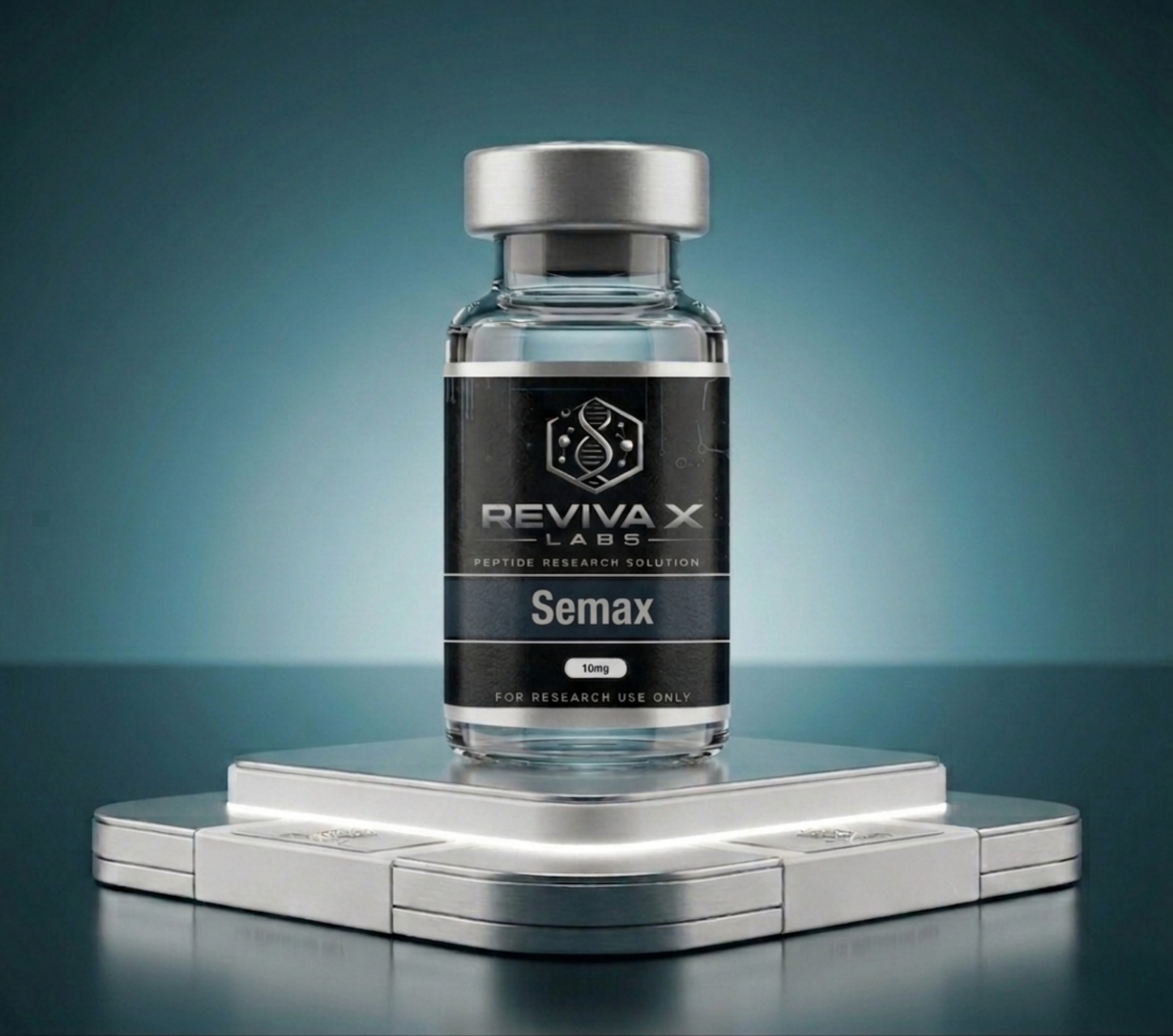
Semax is a synthetic heptapeptide analog based on the ACTH(4-10) fragment (Met-Glu-His-Phe-Pro-Gly-Pro), modified with a C-terminal Pro-Gly-Pro tripeptide extension designed to increase metabolic stability and resistance to enzymatic degradation. The peptide was originally developed at the Institute of Molecular Genetics of the Russian Academy of Sciences.
In preclinical laboratory research, Semax is examined as a molecular tool for studying neurotrophic factor signaling, including brain-derived neurotrophic factor (BDNF) and nerve growth factor (NGF) expression pathways. Experimental models have investigated its effects on neuronal survival, synaptic plasticity markers, and transcriptional activity in in-vitro neuronal cultures and in-vivo animal systems.
Additional published preclinical work references Semax in studies of cerebrovascular signaling, oxidative stress response, and immune-associated molecular pathways in central nervous system tissue preparations. Its melanocortin-derived structure positions it as a research tool for investigating ACTH-related neuropeptide signaling independent of adrenal corticotropic effects.
Sequence: Met-Glu-His-Phe-Pro-Gly-Pro Molecular Formula: C₃₉H₅₁N₉O₁₀S Molecular Weight: 813.93 g/mol CAS: 80714-61-0
For non-clinical laboratory research only. Not for human consumption.